Meat and Poultry
Brining vs. Salting: Which Is Better for Lean Poultry?
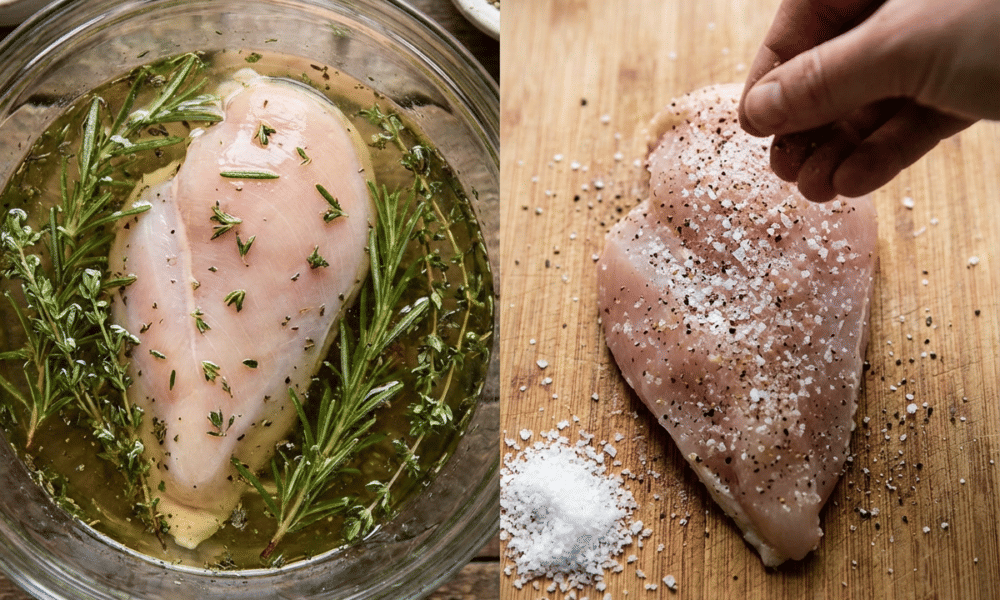
Here’s a confession: I spent years thinking brining was the gold standard. That big pot of salty water sitting in my fridge overnight felt serious — like I was doing something scientific, something intentional. My chicken breasts came out juicy. I was proud of them.
Then I tried dry salting. And I had to rethink everything.
Both techniques work. Both improve lean poultry dramatically compared to doing nothing at all. But they work in fundamentally different ways, they produce different results, and — this is the part nobody tells you upfront — one of them is significantly better for what most weeknight cooks actually want. Let’s get into it.
First, What’s Actually Happening Inside the Meat
Before we pick a winner, it helps to understand what both methods are trying to solve. Lean poultry — chicken breasts especially — is basically muscle fiber packed tightly together with very little connective tissue or fat to bail you out when heat tightens everything up. When you cook a chicken breast, those fibers contract and squeeze out moisture. A poorly handled breast is essentially wringing itself dry in your pan.
Salt is the intervention. It disrupts the protein structure of those muscle fibers, making them less able to contract as forcefully during cooking. The result is meat that holds onto more of its natural moisture when heat hits. That’s the shared goal. Where brining and dry salting diverge is in how they deliver that salt — and what comes along for the ride.
Wet Brining: The Method That Adds Water to Add Moisture
A wet brine is a solution of salt (and usually sugar) dissolved in water, in which your chicken soaks anywhere from 30 minutes to overnight. The science here is osmosis and diffusion working in tandem: salt initially pulls moisture out of the meat, then a more complex equilibrium process drives the seasoned liquid back in, along with some of the dissolved salt.
The result? The chicken absorbs water. Measurably so — a brined breast can take on 6–8% of its weight in added liquid. Which sounds great, until you realize what that means for the surface of the meat.
All that extra water has to go somewhere when heat hits. It steams. And steam is the sworn enemy of a good sear. You’ve seen this happen: golden-skinned chicken in your head, grey-steamed chicken in your pan. The outside of a wet-brined breast is essentially pre-loaded with moisture that needs to escape before browning can begin — and in a weeknight cook, you often don’t have the time or pan temperature to wait it out.
The other thing wet brining does is dilute. That concentrated chicken flavor you’re working so hard to develop? It gets a little washed out, literally, by the absorbed water. The meat tastes seasoned, yes, but somehow also a bit… softer around the edges. Less chicken-y.
When wet brining wins: For very high-heat, very fast cooking — grilling over direct flame, deep frying — that extra moisture can actually be an asset. The water buys time before the meat dries out, and the intense heat handles the surface moisture problem decisively. It’s also excellent for whole birds going into a smoker, where hours of dry heat would otherwise wreak havoc.
Dry Salting: Letting the Chicken Season Itself
Dry salting (also called dry brining, which is technically a contradiction, but we’re going with it) is simpler and — I’ll argue — smarter. You season the surface of the chicken generously with kosher salt, set it on a rack uncovered in the fridge, and walk away for anywhere from 45 minutes to 24 hours.
Here’s what happens. The salt draws a small amount of moisture to the surface initially — you’ll actually see tiny beads of liquid form. That moisture dissolves the salt into a concentrated brine. Then — and this is the clever part — the meat reabsorbs that liquid, pulling the salt deep into the muscle tissue. Simultaneously, the surface dries out as the refrigerator air circulates around the uncovered meat.
You end up with chicken that is seasoned from the inside out and has a drier surface ready to sear beautifully the moment it hits a hot pan. No pat-drying required. No waiting for excess moisture to cook off. Just immediate, aggressive browning.
The flavor difference is real. Dry salting concentrates and intensifies the chicken’s natural taste rather than diluting it. There’s a depth to it — a savory richness — that wet-brined chicken simply can’t match.
The Head-to-Head
| Wet Brine | Dry Salt | |
|---|---|---|
| Moisture retention | High (adds water) | High (retains natural juices) |
| Flavor | Diluted slightly | Concentrated, deeper |
| Sear quality | Poor to moderate | Excellent |
| Time needed | 1–8 hours minimum | 45 min to 24 hours |
| Fridge space | Significant (large vessel) | Minimal (just a rack) |
| Cleanup | Annoying | Almost none |
| Best for | Grilling, smoking, frying | Searing, roasting, pan-roasting |
So Which One Is Actually Better?
For lean poultry cooked in a pan or oven — which is 90% of weeknight chicken — dry salting wins decisively. You get better flavor, better skin, better sear, and less mess. The only thing you sacrifice is the slight insurance policy of added water, and that’s a trade worth making every single time.
There’s also a practical elegance to dry salting that I’ve come to genuinely love. Season the chicken before you go to work, leave it uncovered on a rack in the fridge, come home and cook it. No brining vessel, no lugging a pot of salty water around, no excavating your refrigerator to find space for something the size of a small aquarium.
Wet brining has its moments — I’d never argue against a brined bird going into a holiday smoker. But for the everyday chicken breast, the humble, overlooked dry salt is the quiet professional who actually gets the job done.
Season it. Let it sit. Cook it hot. That’s the whole playbook.