General
Why Your Bagels Keep Letting You Down (And Exactly How to Fix It)
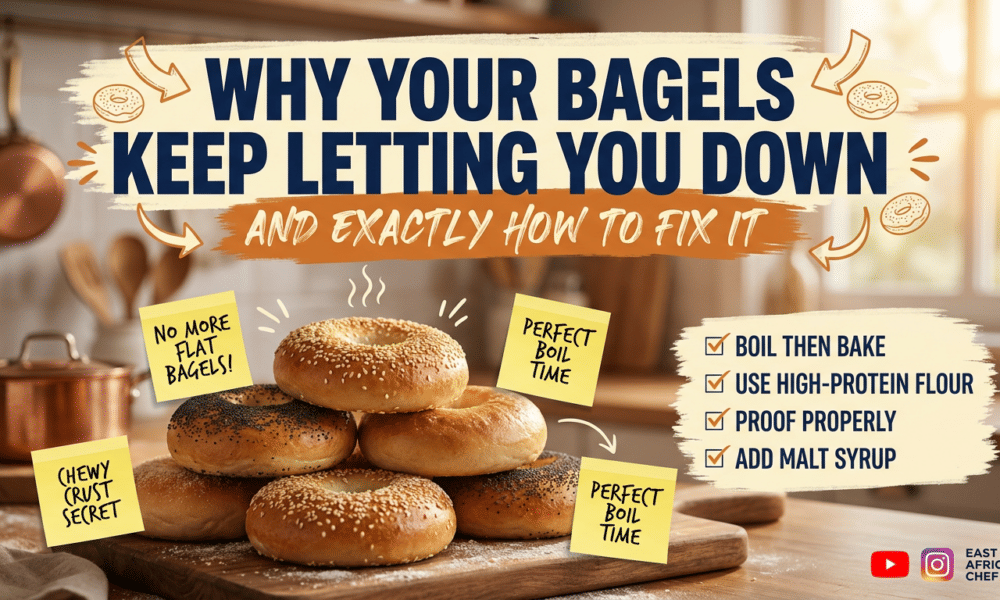
Bagels look deceptively simple. Round, shiny, with a hole in the middle — how complicated can they be? Ask anyone who’s pulled a flat, dull, or rock-hard batch out of the oven, and they’ll tell you: very. The bagel is a demanding little bread with a specific personality, and if you miss one step, it will absolutely let you know.
Whether you’re baking for a café menu, a family breakfast, or just because you’ve decided to level up your bread game, this guide breaks down the most common bagel problems, what’s actually causing them, and exactly what to do to fix it.
The Secret Is in the Boil (And the Dough Before It)
Before we dive into troubleshooting, here’s the one thing most home bakers miss: bagels are a two-stage product. The boil is not a formality — it’s where the magic (and most of the problems) begins. Get the dough right, get the boil right, and the oven just finishes the job.
Now, let’s get into it.
Problem 1: Dull, Flat-Looking Bagels
You want that gorgeous glossy shell. Instead, your bagels look like they gave up halfway through.
What went wrong: The boiling water wasn’t hot enough, or you didn’t leave the bagels in long enough. That shine comes from starch gelatinizing on the surface — and that only happens at proper temperature and with adequate contact time.
Fix it: Make sure your boiling water is between 93–100ºC — a proper rolling boil, not a lazy simmer. Then leave the bagels in a little longer than you think necessary. That extra half-minute pays off in shine.
Problem 2: Bagels That Are Small and Unbelievably Hard
Dense little hockey pucks — the opposite of everything a bagel should be.
What went wrong: Usually a combination of three things: the dough didn’t ferment long enough, there wasn’t enough yeast to get a proper rise, or the bagels were boiled for too long and turned tough.
Fix it: First, be patient with the proof — let the dough breathe and develop. Check your yeast quantity; a stingy hand on the yeast will always betray you. And time your boil carefully — over-boiling kills the texture before the oven even gets involved.
Problem 3: Blisters on the Surface
Some bakers actually want blisters (Montreal-style, anyone?), but if you weren’t going for that look, it means something went sideways in cold storage.
What went wrong: The bagels spent too long in the retarder (cold proofing fridge), or the environment in there was too dry, causing the surface to dry unevenly.
Fix it: Cut down the retarding time, and cover your bagels while they’re in the fridge to keep humidity consistent. Reducing air movement in the retarder also helps — a dry environment is the enemy of smooth bagel skin.
Problem 4: Flat Bottoms
A proper bagel should have a rounded, springy base. Flat-bottomed bagels look sad and usually eat dense.
What went wrong: The dough is too soft (too much water) or the flour doesn’t have enough gluten strength to hold the structure.
Fix it: Dial back the water in your recipe — bagel dough should feel stiff, noticeably firmer than a sandwich loaf. And use high-gluten bread flour, not all-purpose. Bagels need that muscular gluten structure to keep their shape.
Problem 5: Bagels That Are Too Big and Too Soft
The opposite problem — pillow-like puffs that have lost all that signature chew.
What went wrong: Over-proofing. The dough rose for too long before it hit the water, so by the time it reached the boil (and later the oven), the structure was already weakened.
Fix it: Reduce both the yeast quantity and the proofing time. Also check your salt levels — salt controls fermentation, and getting it right helps manage the rise. Then boil longer to help set the crust before baking.
Problem 6: Bagels Gluing Themselves to the Oven Boards
You reach in to flip them and half the bagel stays behind. Nightmare.
What went wrong: Simple — the bagels were still wet when they went onto the boards.
Fix it: After boiling, let them drain and dry properly before placing and turning. A minute or two on a wire rack after the water makes a real difference.
Problem 7: Bagels Collapsing or Shrinking in the Oven
They went in looking great. They came out looking defeated.
What went wrong: One of three culprits: the dough wasn’t mixed long enough to build proper gluten, the dough was too cold when it went in, or it was over-proofed.
Fix it: Mix to full gluten development — the dough should be smooth, strong, and slightly tacky but not sticky. Bring it to proper temperature before shaping. And don’t let it proof too long before the boil.
Problem 8: Dough Tearing During Shaping
You’re trying to roll and shape the bagels, and the dough just keeps ripping apart.
What went wrong: The dough is either too warm or too old — both cause the gluten to break down and lose cohesion.
Fix it: Check your dough temperature and keep it in the optimal range for handling. Also double-check salt levels — salt strengthens gluten structure and helps the dough hold together during makeup.
Problem 9: Surface Tears During Baking
Cracks and tears appearing on the surface while the bagels bake.
What went wrong: Old dough — past its prime fermentation window — tends to behave erratically in the oven.
Fix it: Work within your dough’s timing window. If it’s been sitting too long, it’s showing its age. Review your entire makeup procedure and double-check salt levels, which play a stabilizing role in the dough’s structure.
The Bagel Baker’s Quick-Reference Checklist
Before every batch, run through this mentally:
- Dough is stiff, not soft
- Yeast and salt levels measured accurately
- Proof time controlled (don’t walk away and forget it)
- Boiling water is a genuine rolling boil (93–100ºC)
- Boil time is timed, not guessed
- Bagels drain and dry before boards
- Dough is fresh, not over-aged
Nail these, and your bagel game becomes dramatically more consistent.
Bagel-making rewards bakers who pay attention. Every step — from dough hydration to boil time — has a reason, and when something goes wrong, the dough is usually trying to tell you exactly where the problem started. Learn to read it, and you’ll be pulling perfect batches every single time.