Baking
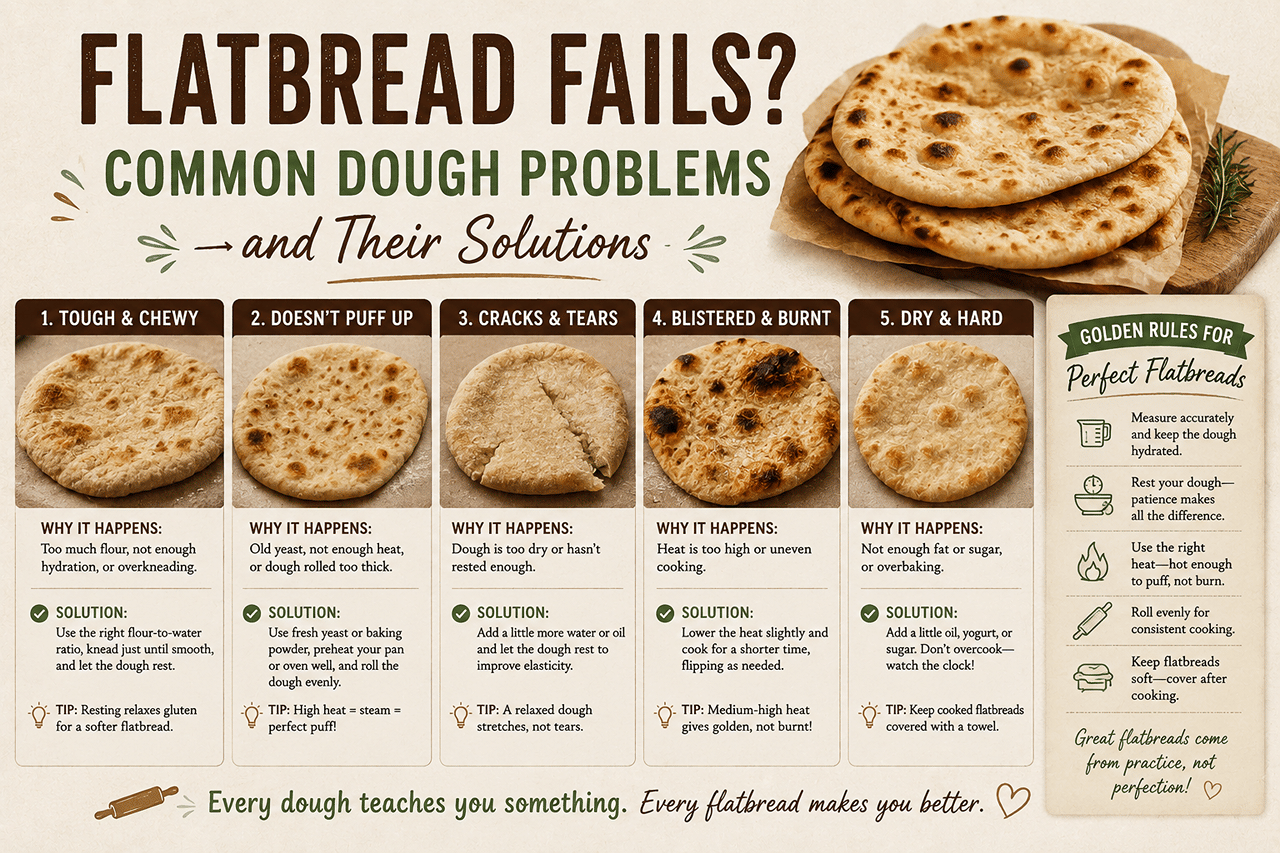
Flatbread Fails? Common Dough Problems and Their Solutions

There’s something incredibly satisfying about making flatbreads at home. Whether it’s the soft, flaky layers of a perfect Chapati, the pillowy puff of a Pita pocket, or the slightly charred bubbles on homemade Naan, these simple breads are versatile staples in kitchens across Kenya and around the world. They seem so straightforward, often requiring just a few basic ingredients. Yet, sometimes things don’t go quite as planned.
Maybe your Chapatis turned out tough enough to use as plates? Or perhaps your Pita bread stubbornly refused to puff, staying resolutely flat? Did your dough stick relentlessly to the counter, or tear as you tried to roll it out? If you’ve faced these issues, take heart – you’re experiencing common hurdles that many beginner bakers encounter! Troubleshooting flat bread dough is a normal part of the learning process.
The good news is that most flatbread fails stem from a few key areas, and once you understand them, they are often easy to fix. This guide will help you diagnose the most common problems and offer practical solutions, so you can get back to enjoying delicious, perfectly textured homemade flatbreads.
What Are We Talking About? A Quick Look at Flatbreads
Before we dive into troubleshooting, let’s quickly define what we mean by flatbreads.
Defining Flatbreads: Simple Doughs, Quick Cooking
Generally, flatbreads are breads made with flour, water, and salt, rolled out relatively thin, and cooked quickly on a hot surface like a griddle (tava), skillet, or in a very hot oven. Their simplicity is their beauty!
Variety is Key: Leavened vs. Unleavened
Flatbreads fall into two main categories:
- Unleavened: These rely solely on the dough’s ingredients and the cooking method (like steam) for any puffiness or texture. Examples include Kenyan Chapati, Roti, and Tortillas. They don’t use yeast or chemical leaveners.
- Leavened: These use yeast (like Pita and Naan) or sometimes baking powder to help them rise and create a lighter, airier texture.
Common Examples
Here in Kenya, Chapati is king! But other popular flatbreads worldwide include Naan (often enriched with yogurt), Pita (famous for its pocket), Lavash, Roti, and Corn or Flour Tortillas.1 While techniques vary slightly, many common dough problems and their solutions apply across different types.
Problem #1: My Flatbread is Tough and Chewy (Like Cardboard!)
This is a very common complaint, especially with unleavened flatbreads like Chapati.
-
Possible Cause: Too Much Flour / Dough Too Dry
- The Issue: Adding too much flour during mixing or rolling makes the dough stiff and dry, leading to a tough result.2 Remember, flour absorbs moisture.
- The Solution: Measure your flour accurately! Weighing is always best, as discussed in our guide Baking 101: Mastering the Art of Measuring. If using cups, use the spoon-and-level method. The dough for most flatbreads should feel soft and pliable, not stiff.3 If your dough feels genuinely dry during mixing (climate can affect flour absorption!), add water very sparingly, a teaspoon at a time. Also, avoid adding excessive flour during rolling – use just enough to prevent sticking.
-
Possible Cause: Overworking/Over-Kneading
- The Issue: While some gluten development is needed, over-kneading, especially for unleavened flatbreads like Chapati where tenderness is desired, can make the gluten too strong and elastic, resulting in toughness.
- The Solution: Knead only as much as the recipe recommends. For many simple flatbreads, you just need to knead until the dough comes together and feels smooth (maybe 5-8 minutes by hand). Don’t aim for the same intense gluten development you’d want for a high-rising loaf bread.
-
Possible Cause: Not Enough Fat (If recipe calls for it)
- The Issue: Fats like oil, ghee, or butter tenderize the dough.4 Omitting or reducing them in recipes that call for them (like many Chapati recipes) can lead to a tougher, drier texture.
- The Solution: Use the amount of fat specified in your recipe. It plays a crucial role in texture.
Problem #2: My Flatbread is Dry and Crumbly
Similar to being tough, but more about falling apart easily.
-
Possible Cause: Dough Too Dry (Too much flour again!)
- The Issue: Same suspect as toughness! Insufficient hydration is a primary cause of dryness.
- The Solution: Accurate flour measurement is key. Aim for a soft, slightly yielding dough texture.
-
Possible Cause: Not Enough Fat or Moisture-Rich Ingredients
- The Issue: Recipes for softer flatbreads often include enriching ingredients (ghee/oil for Chapati, yogurt/milk for Naan).5 These contribute significant moisture and tenderness. Leaving them out or reducing them leads to dryness.
- The Solution: Trust the recipe! Use the enriching ingredients as listed. They are there for texture as much as flavour.
-
Possible Cause: Overcooking
- The Issue: Flatbreads cook quickly. Leaving them on the heat too long evaporates too much moisture, resulting in a dry, brittle texture.
- The Solution: Cook fast over appropriate heat (usually medium-high to high). Watch for the visual cues mentioned in your recipe (puffing, golden spots) and remove promptly. Don’t aim to bake them like thick loaf bread.
-
Possible Cause: Cooked Surface Too Dry Before Cooking?
- The Issue: If you roll out your flatbreads and leave them sitting uncovered for too long before cooking, the surface can dry out, contributing to a less pliable, drier result.
- The Solution: Keep rolled-out dough covered with a clean kitchen towel or plastic wrap if you aren’t cooking it immediately. Cook soon after rolling.
If your bread issues often involve dryness or crumbling, you might find overlapping tips in our guide to Solving the Crumbly Bread Mystery.
Problem #3: My Flatbread Won’t Puff Up! (Especially Pita/Naan/Chapati)
That magical puff, whether it’s the full Pita pocket or the bubbles on Chapati and Naan, is often desired but sometimes elusive.
-
Possible Cause: Dough Too Dry or Too Stiff
- The Issue: A stiff dough doesn’t have enough flexibility or moisture to create the steam needed for a good puff.
- The Solution: Ensure your dough is adequately hydrated – it should be soft and pliable. Don’t be afraid of a slightly sticky dough for leavened flatbreads like Pita/Naan.
-
Possible Cause: Not Enough Heat / Pan Not Hot Enough
- The Issue: This is CRUCIAL for puffing! The rapid expansion requires intense heat to quickly turn moisture within the dough into steam, forcing the layers apart. A lukewarm pan won’t cut it.
- The Solution: Preheat your cooking surface thoroughly! Whether it’s a tava, cast iron skillet, baking stone, or oven, make sure it’s properly hot (often medium-high to high heat on the stovetop, or very high heat for oven-baked Pita) before the flatbread goes on. You need that initial blast of heat.
-
Possible Cause: Rolled Too Thick or Too Thin
- The Issue: There’s a sweet spot. If rolled too thick, the heat may not penetrate quickly enough to generate sufficient steam for puffing. If rolled extremely thin (especially Pita), there might not be enough dough structure to trap the steam effectively.
- The Solution: Follow recipe guidelines for thickness. Experiment slightly if needed – sometimes a millimeter difference matters!
-
Possible Cause: Dough Was Not Rested Enough
- The Issue: Resting allows the gluten to relax. Tightly wound gluten resists expansion. This applies after kneading and often requires a short rest after rolling, too.
- The Solution: Don’t skip the resting times specified in your recipe! Let the dough rest covered after kneading, and often for a few minutes after rolling before cooking.
-
Possible Cause: Leavening Agent Issues (for Pita/Naan)
- The Issue: If making leavened flatbreads, inactive yeast or old baking powder won’t produce the gas needed to contribute to the puff.
- The Solution: Check the expiration dates on your yeast and baking powder. Test your yeast if unsure (dissolve in warm water with a pinch of sugar – it should get foamy).
Visualizing the puff can help! Search online for videos demonstrating “pita bread puffing” or “chapati puffing on flame” (if using direct flame method safely) to see the technique in action.
Problem #4: My Dough is Sticking Everywhere!
A sticky dough can be frustrating to handle and roll.
-
Possible Cause: Dough Too Wet / High Hydration
- The Issue: Some flatbread doughs (like Naan or certain Pita recipes) are intentionally high hydration for a softer result. This makes them sticky.
- The Solution: Don’t panic and add lots of extra flour into the dough – this will make it tough. Instead, manage the stickiness:
- Use a well-floured work surface and rolling pin.
- Lightly flour the top of the dough ball too.
- Use a bench scraper to help lift and move the dough.
- Handle the dough with lightly oiled or even slightly wet hands instead of floured hands sometimes.
-
Possible Cause: Not Enough Flour on Work Surface/Rolling Pin
- The Issue: Simply not using enough dusting flour.
- The Solution: Keep your surface and pin lightly but consistently floured, reapplying as needed. Rice flour can be excellent for dusting as it doesn’t incorporate as easily into the dough.
-
Possible Cause: Dough Not Rested Enough
- The Issue: Sometimes dough feels stickier right after mixing/kneading. Resting allows the flour to fully hydrate, making it slightly less tacky.
- The Solution: Ensure you’re allowing the post-kneading rest time mentioned in the recipe.
Problem #5: My Dough Tears When Rolling
You’re trying to roll it thin, and holes keep appearing.
-
Possible Cause: Gluten Not Relaxed Enough (Insufficient resting time)
- The Issue: This is the most common cause. If the gluten is still tight and elastic from kneading or handling, it will resist rolling and tear instead of stretching.
- The Solution: Let the dough rest! Allow the full resting period after kneading. Crucially, also let the individual dough balls rest for 10-15 minutes after portioning and before rolling. If the dough keeps springing back or tearing as you roll, cover it and let it rest for another 5-10 minutes, then try again.
-
Possible Cause: Dough Too Dry
- The Issue: Very dry dough lacks pliability and can crack or tear when stretched thin.
- The Solution: Ensure adequate hydration during mixing (soft, pliable dough).
-
Possible Cause: Aggressive Rolling Technique
- The Issue: Pushing down too hard or rolling forcefully in one direction can stretch the dough beyond its limit.
- The Solution: Roll gently but firmly, starting from the center and working outwards. Rotate the dough frequently (quarter turn) to ensure even thickness and prevent sticking/tearing in one spot.
Problem #6: My Flatbread Cooks Unevenly (Burnt spots, raw spots)
Getting that perfect, even cook can be tricky.
-
Possible Cause: Uneven Heat Distribution in Pan/Oven
- The Issue: Hot spots on your pan or in your oven cause some parts to burn while others remain undercooked.
- The Solution: Use a heavy-bottomed pan (like cast iron or a good quality non-stick) which distributes heat more evenly.6 Ensure your pan/oven is fully preheated. If you notice uneven cooking, try rotating the flatbread partway through.
-
Possible Cause: Dough Rolled Unevenly
- The Issue: If your dough circle has thick and thin patches, the thin spots will cook (and potentially burn) much faster than the thick spots.
- The Solution: Practice your rolling! Aim for consistent thickness across the entire flatbread. Rolling from the center out and rotating the dough helps achieve this.
-
Possible Cause: Cooking Temperature Too High or Too Low
- The Issue: Finding the right heat level is key. Too high, and the outside burns before the inside cooks (especially if slightly thick). Too low, and it might dry out before it gets nice colour or puff, or take too long to cook.
- The Solution: Adjust your stove/oven temperature. Most flatbreads like medium-high to high heat for quick cooking. Observe carefully and adjust based on your results and your specific stove – they all behave differently!
Practice Makes Perfect: Embracing the Flatbread Journey
Troubleshooting flat bread dough is rarely about one single “magic fix.” It’s often a combination of factors – hydration, handling, resting, heat. Don’t be discouraged if your first few attempts aren’t perfect!
Think like a detective: What was the main problem? Toughness? Lack of puff? Sticking? Then look at the most likely causes for that specific problem and try adjusting one thing next time. Maybe add a tiny bit more water, let it rest longer, or make sure your pan is hotter.
Making flatbreads, especially something like Chapati that relies so much on feel and technique, is a skill that improves immensely with practice. Each batch teaches you something. Soon, you’ll develop an intuition for how the dough should feel and how it behaves on your specific equipment. The reward – stacks of warm, delicious, homemade flatbread – is well worth the effort!
From Flat Fails to Fantastic Flatbreads!
Flatbreads are wonderfully diverse and relatively simple to make, but they do have their nuances. By understanding the common reasons behind issues like toughness, dryness, sticking, tearing, lack of puff, or uneven cooking, you can systematically address them.
Focus on accurate measuring (especially flour!), proper hydration (usually a soft dough), appropriate handling (don’t over-knead unleavened types, don’t skip resting!), even rolling, and crucially, sufficient heat during cooking. These are the key areas for successful flatbread troubleshooting.
Keep practicing, be patient with yourself, and enjoy the process. Before you know it, you’ll be whipping up batches of fantastic flatbreads with confidence, impressing yourself and anyone lucky enough to share them!
Happy Flatbread Baking!