
Meat and Poultry
The Real Reason You Should Never Thaw Meat on the Counter
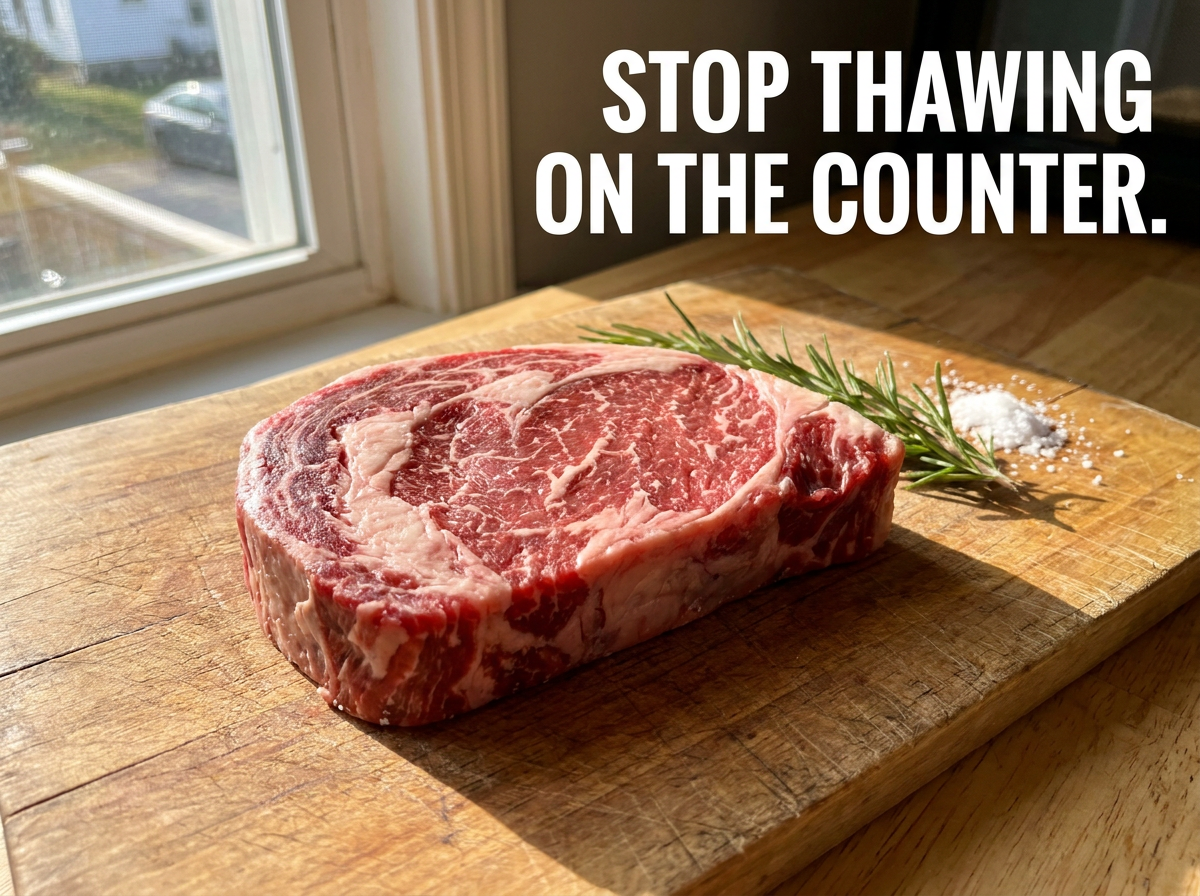
Let me paint a picture. It’s a Tuesday. You pulled a pack of ground beef from the freezer this morning, left it on the counter before rushing out the door, and now you’re back eight hours later, ready to make tacos. The meat is thawed. It looks fine. It smells… mostly fine. You’ve done this a hundred times and nothing bad has ever happened.
I’m not going to tell you that you’re wrong to feel confident. I’m going to tell you something more useful: you’ve been getting lucky, and understanding exactly why will change how you think about this forever.
Meet the Danger Zone
There’s a temperature range — 40°F to 140°F — that food scientists call the Temperature Danger Zone, and it might be the most important concept in kitchen safety that nobody actually explains properly. Within this range, the bacteria naturally present on raw meat don’t just survive. They thrive. They double in population every 20 minutes under ideal conditions. Leave meat in the danger zone long enough and you’re not dealing with a few dozen bacterial cells anymore — you’re dealing with millions.
Your kitchen counter sits comfortably in the middle of that range. Most homes hover around 68–72°F, which is practically a spa day for Salmonella and Campylobacter. When you set frozen chicken or beef on the counter, the exterior of the meat thaws and enters the danger zone within the first 30 minutes. The inside might still be ice-solid for another two hours — but the outside? Already warm, already teeming, already on the clock.
Here’s the kicker that most people miss: cooking kills bacteria, yes. But some bacteria produce heat-stable toxins before they die — compounds that survive even thorough cooking. So you can hit 165°F internally and still serve up a side of foodborne illness, because the damage was done hours earlier on your countertop. Cooking isn’t a reset button. It’s more like a last line of defense that occasionally gets flanked.
The Math That Should Unsettle You
Let’s say a piece of chicken has a modest starting bacterial load — perfectly normal for fresh meat. You leave it on the counter for four hours. In that time, bacteria doubling every 20 minutes undergo roughly 12 doubling cycles. That’s 2¹² — a 4,096-fold increase. What started as a manageable number is now an overwhelming one.
And that’s under moderate conditions. A warm summer kitchen, a thick cut that takes longer to thaw, a piece of meat that was already a day old when it went into the freezer — any of these factors accelerate the math considerably.
The reason most counter-thawers never get sick isn’t because the method is safe. It’s because foodborne illness requires hitting a certain threshold of bacterial load, and on lucky days, you don’t quite get there. But “I’ve never gotten sick” is the equivalent of “I’ve texted while driving and never crashed.” The absence of consequence isn’t the same as the absence of risk.
What Actually Works — And Why
The frustrating thing is that safe thawing methods aren’t complicated. They just require a small shift in how you think about planning.
The refrigerator is the gold standard. Cold enough to keep bacteria dormant, warm enough to gradually thaw meat over 12–24 hours. The chicken stays below 40°F the entire time. Nothing exciting happens. That’s the point.
Cold running water — sealed in a bag, submerged under a running tap — works in under 30 minutes for most cuts because moving water transfers heat far more efficiently than still air. The key is cold water. Not cool. Cold. And you cook it immediately after.
The microwave gets the job done in under five minutes if you use the defrost setting and treat it like a baton handoff — thaw it, then cook it, with no pause in between. Microwaves thaw unevenly, which means some parts of the meat are already warming toward the danger zone while others are still frozen. The only safe response is immediate heat.
What all three methods share: they either keep the meat below the danger zone the entire time, or they move through it so quickly that bacteria don’t get their doubling cycles in.
The Real Villain Is Confidence
Here’s what I actually think is going on when people counter-thaw. It’s not laziness, exactly. It’s accumulated false confidence — the kind that builds when you’ve done something risky many times without visible consequences. The meat looked fine. Dinner was fine. Nobody got sick. The habit calcifies into certainty.
But foodborne illness is a famously unreliable feedback loop. Symptoms can take 6 to 72 hours to appear. By the time you’re feeling terrible, you’ve long forgotten about the chicken that sat on the counter Tuesday morning. You blame the restaurant you visited Wednesday. The connection never gets made. The habit never gets corrected.
It’s one of those rare situations where being more informed genuinely changes your behavior — not because the rules changed, but because the invisible mechanics finally make sense.
A Practical Reframe
I’m not asking you to become the kind of person who meal preps on Sundays and always has tomorrow’s protein thawing in the fridge. That’s aspirational, sure, but real life doesn’t always cooperate.
What I’m asking is simpler: when you forget to plan ahead, choose the cold water method instead of the counter. It takes the same amount of active thought, costs you maybe 20 minutes, and keeps the entire process below the bacterial growth threshold. You get the spontaneity of a last-minute dinner without the Russian roulette.
The counter isn’t a thawing method. It’s a gamble with decent odds and a genuinely terrible worst case. Once you understand why — once the image of bacteria doubling every 20 minutes on the surface of your chicken breast is properly lodged in your brain — the cold water tap starts to feel less like a hassle and more like the obvious choice.
Which, quietly, it always was.