
Meat and Poultry
One-Pot Chicken Meals: Maximizing Flavor with Minimal Cleanup
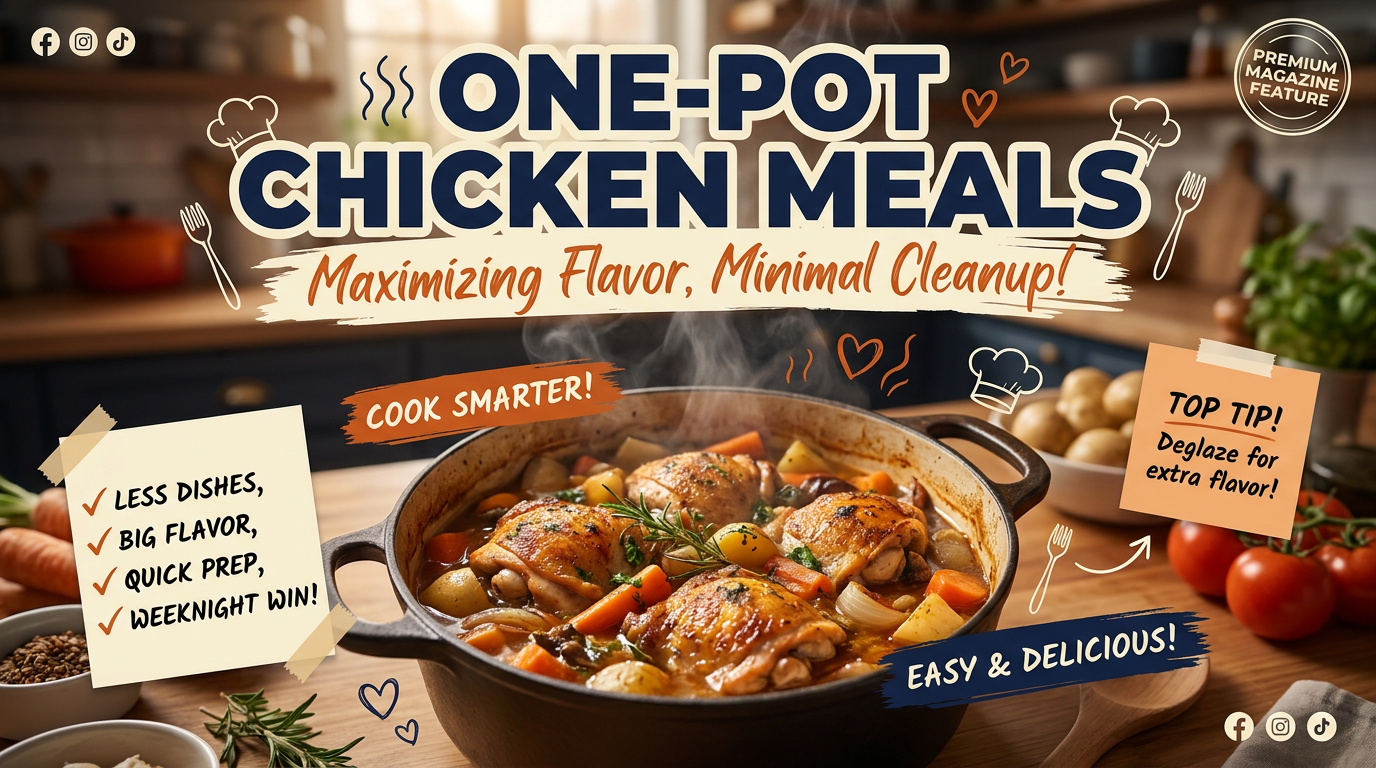
One-pot chicken meals deliver restaurant-quality flavor with minimal effort — here’s everything you need to know to master this weeknight cooking technique.
There’s a specific kind of exhaustion that hits somewhere between pulling into the driveway and opening the refrigerator. Not physical tired. Not emotional tired. Just the particular weariness of a person who has cooked dinner five nights in a row and is now staring at a pile of dishes from last night wondering why they didn’t just become someone who eats cereal for every meal.
One-pot chicken meals are the answer to that exhaustion. Not a compromise answer. Not a “fine, I guess this works” answer. A genuine, full-throated solution that produces food worth looking forward to and leaves your kitchen looking like an adult lives there rather than a culinary tornado.
I’ve been cooking one-pot chicken dinners long enough to have strong opinions about them, and I’m about to share every single one.
What Makes a True One-Pot Chicken Meal
Before we go further, a clarification — because “one-pot” has been stretched, in certain corners of the internet, to mean things it absolutely does not mean. Cooking the chicken in one pot and the rice in another and the vegetables in a third is not one-pot cooking. That’s regular cooking with aspirational branding.
A true one-pot chicken meal means a single vessel does all the heavy lifting: the browning, the braising, the simmering, the finishing. Everything that goes into the pot stays in the pot until dinner is on the table. One pan to wash. One piece of equipment to explain to whoever does the dishes. That’s the deal, and it’s a good one.
The vessels that make this possible are a short list: a Dutch oven, a deep cast iron skillet, a wide braiser, or a large high-sided sauté pan. Any of these, in the 4–6 quart range, will handle virtually every one-pot chicken recipe ever written. If you own exactly one of them, you’re already equipped.
The Science of Why One-Pot Cooking Works So Well for Chicken
Here’s something nobody tells you about one-pot cooking, but understanding it changes everything: the technique is almost scientifically optimized for chicken specifically.
Think about what happens in a single vessel over a couple of hours. Chicken releases fat and fond as it browns — that caramelized, concentrated flavor compound stuck to the bottom of the pot. Aromatics cook in that same fat, absorbing and amplifying it. Liquid added later deglazes the fond, pulling it into the broth. Everything that cooks in that pot flavors everything else in that pot. It’s a continuous, circular flavor-building system where no ingredient cooks in isolation.
Compare that to cooking your components separately — chicken in one pan, vegetables in another, sauce in a third — and then combining them at the end. You get the sum of the parts. One-pot cooking gives you something greater than the sum of the parts, because every element had the chance to influence every other element throughout the entire process.
That’s not a small difference. That’s the difference between a meal and a memory.
The Non-Negotiable First Step Everyone Skips
I’m going to tell you something that will immediately improve every one-pot chicken meal you ever make, and it’s going to sound almost insultingly obvious: brown your chicken first.
Not slightly. Not “a little color on each side.” Brown it aggressively — deep mahogany, skin that crackles when you press it, fond on the pot bottom that looks almost alarming in its darkness. This step takes eight minutes and pays compound interest for the entire rest of the cooking time.
The Maillard reaction happening on the surface of that chicken is creating hundreds of new flavor compounds that exist nowhere else in the recipe. They’ll dissolve into your braising liquid. They’ll coat your vegetables. They’ll make every bite of the finished dish taste like it has a depth that an unbrowned pot of chicken simply cannot achieve.
Most one-pot recipes list this as optional or mention it in passing. It isn’t optional. It’s the foundation. Everything built on top of properly browned chicken tastes better. Everything built on pale, skipped chicken tastes like it’s missing something — because it is.
Five One-Pot Chicken Meals Worth Mastering
1. Classic Chicken and Rice (Arroz con Pollo Adjacent)
This is the one-pot meal that has been feeding families across virtually every culture on earth for centuries, which is about as strong an endorsement as a dish can receive. The technique is always the same even when the seasonings vary: brown the chicken, build aromatics in the rendered fat, toast the raw rice briefly in that same fat, add liquid, nestle the chicken back in, cover and let everything finish together.
The rice absorbs the chicken fat, the chicken stock, and whatever aromatics you used — smoked paprika, cumin, and saffron if you’re going Spanish; turmeric, cinnamon, and dried apricots if you’re leaning Moroccan; ginger, scallions, and a splash of soy if you want something with Asian-inspired notes. Same architecture, wildly different results. This dish is essentially infinitely configurable, which is why it shows up in some form in almost every food culture that has ever encountered a chicken and a grain simultaneously.
The one mistake people make: adding too much liquid. The rice is cooking in a covered, steamy environment with fat-enriched liquid. Use about a quarter less liquid than the rice package calls for, or you end up with something closer to porridge than pilaf.
2. Braised Chicken Thighs with White Beans and Kale
This is Tuesday dinner disguised as Sunday cooking, which might be the highest compliment I know how to pay a recipe. Bone-in chicken thighs — always thighs for braising, we’ve established this by now — go in skin-side down over high heat until the skin is properly, unambiguously golden. Out they come. In goes diced onion, fennel, and garlic, sweating in the rendered chicken fat until soft and fragrant. A tin of white beans, a handful of torn kale, chicken stock, a Parmesan rind if you have one lurking in the cheese drawer, and the thighs back on top, nestled into the beans like they were always meant to be there.
Forty minutes in a 375°F oven, lid on for thirty and off for the last ten to re-crisp the skin. The beans absorb the braising liquid and become creamy without turning to mush. The kale wilts into something silky. The chicken skin crisps back up while the meat underneath gets impossibly tender.
One pot. One oven. Dinner that tastes like you were paying attention.
3. Chicken Cacciatore
If braised chicken thighs with white beans is Tuesday disguised as Sunday, cacciatore is Tuesday that stopped pretending and fully committed to being a dinner party. Italian hunters’ stew — cacciatore literally means “hunter” — is built on a foundation of tomatoes, peppers, olives, capers, and white wine, all of which have enough acidity and intensity to make chicken taste like the most interesting version of itself.
Brown the thighs. Build a soffritto — onion, garlic, bell peppers — in the same pot. Add crushed tomatoes, a generous pour of white wine, olives, capers, and fresh thyme. Return the chicken. Simmer covered for 35–40 minutes until the sauce has reduced and concentrated and the meat is practically falling off the bone.
Serve it over polenta, which you can make in a separate pot — but honestly, torn crusty bread dunked directly into the braising liquid is the more honest serving suggestion, and I’ll stand behind that.
4. Coconut Milk Chicken Curry
This one moves fast. Dangerously fast for how good it is — like, you’ll make it on a Wednesday and feel briefly guilty about how little effort produced how much flavor.
Bloom your spices first in a little oil at the bottom of the pot — curry powder, cumin, turmeric, a pinch of cayenne — until they’re fragrant and slightly darkened, about 60 seconds. This step is to spice what browning the chicken is to meat: non-optional flavor infrastructure. Add diced onion and garlic, cook until soft. Add boneless chicken thighs cut into chunks, stir to coat in the spiced oil. Pour in a can of full-fat coconut milk and a cup of chicken stock, add whatever vegetables you have — spinach, chickpeas, sweet potato, cauliflower all work beautifully — and simmer uncovered for 20 minutes until the sauce thickens slightly and the chicken is cooked through.
Finish with lime juice and fresh cilantro. Serve over rice you cooked in the same pot before starting, if you’re feeling organized, or alongside naan if you’re feeling human.
5. One-Pot Lemon Chicken Orzo
This is the sleeper hit — the recipe that looks modest on paper and absolutely stuns people at the table. The technique borrows from Greek avgolemono soup: chicken, orzo, and a bright, lemony broth that gets silky and unctuous from the pasta’s released starch.
Brown bone-in thighs, remove them. Cook diced onion and garlic in the fat. Add chicken stock — more than you think, because the orzo drinks it aggressively — a generous amount of lemon zest, and the thighs back in. After 20 minutes, add the orzo directly to the simmering liquid around the chicken and stir occasionally as it cooks, absorbing the stock and releasing starch simultaneously. When the orzo is just cooked through and the liquid has reduced to a creamy, thick consistency, pull the chicken out, shred the meat, return it to the pot with a squeeze of fresh lemon and a fistful of fresh dill.
It’s bright. It’s comforting. It’s somehow simultaneously light and deeply satisfying. And it happens in one pot in about 35 minutes, which should frankly be illegal given how good it is.
The Flavor Variables That Separate Good from Extraordinary
Every one-pot chicken meal operates on the same basic framework. What you put into that framework is where the real creativity lives.
Acid is your best friend. A splash of white wine deglazing the pot after browning, a squeeze of lemon at the end, a tablespoon of sherry vinegar stirred in before serving — acid lifts and brightens everything, cutting through the richness of braised chicken fat and making the whole dish taste more alive. Most one-pot meals that feel “flat” are missing acid, not salt.
Fat carries flavor forward. Don’t drain the rendered chicken fat after browning. Cook your aromatics in it. It’s not excess — it’s the medium through which every subsequent flavor travels to every subsequent ingredient.
Finish with something fresh. Braised dishes can taste insular — everything cooked together for a long time starts to taste like one unified note. Fresh herbs added at the end (not during cooking), a grating of citrus zest, a drizzle of good olive oil — these elements exist outside the braise and create contrast that makes the dish feel more dimensional.
Season in layers. Salt the chicken before it goes into the pan. Season the aromatics as they cook. Taste and adjust the liquid before the chicken goes back in. Taste again at the end. One-pot cooking doesn’t mean one seasoning moment — it means you have multiple opportunities to build flavor, and each one matters.
The Cleanup That Isn’t Really Cleanup
Here’s the thing about one-pot cooking that nobody mentions because it seems too good to be true: the “cleaning” of the pot is halfway done before you even start washing.
A well-braised pot, deglazed with liquid during cooking, has very little stuck to the bottom. What’s there releases easily with warm water and a wooden spoon. You’re not scrubbing caramelized fond off multiple surfaces — you cooked all that fond into the dish, which is both environmentally responsible and self-interested in the best possible way.
One pot. A few minutes of actual washing. A dinner that tasted like it took much longer and used many more dishes than it did.
That’s the one-pot promise, and it delivers every single time.
Frequently Asked Questions
What is the best cut of chicken for one-pot meals? Bone-in, skin-on chicken thighs are the gold standard for one-pot cooking. Their higher fat content, collagen-rich connective tissue, and forgiving nature in long braises make them categorically better than breasts for this application. They stay juicy, develop deep flavor, and don’t dry out if the cooking runs a few minutes long.
Can I make one-pot chicken meals ahead of time? Yes — and they’re often better the next day. Braised chicken dishes benefit from resting overnight as the flavors meld and deepen. Reheat gently with a splash of added stock to loosen the sauce, and finish with fresh herbs to bring the dish back to life.
What pot is best for one-pot chicken recipes? A 5–6 quart enameled Dutch oven is the single most versatile vessel for one-pot chicken cooking. It moves seamlessly from stovetop to oven, holds heat evenly, and is easy to clean. A large cast iron skillet with a lid is a close second.
How do I keep the chicken skin crispy in a one-pot braise? The key is keeping the skin above the braising liquid rather than submerged in it. Nestle the chicken pieces skin-side up in the sauce, with the liquid coming no higher than halfway up the sides of the pieces. Finish with the lid off for the last 10–15 minutes to let the skin re-crisp.
Are one-pot chicken meals healthy? One-pot chicken meals are generally well-balanced — particularly those built with lean chicken thighs, legumes, vegetables, and broth-based sauces rather than heavy cream. The cooking method itself retains more nutrients than high-heat methods, and the ability to load the pot with vegetables makes nutritional density easy to achieve.