
Learn
The Reverse Pan Sear: The Trick to Perfectly Cooked Thick Steaks
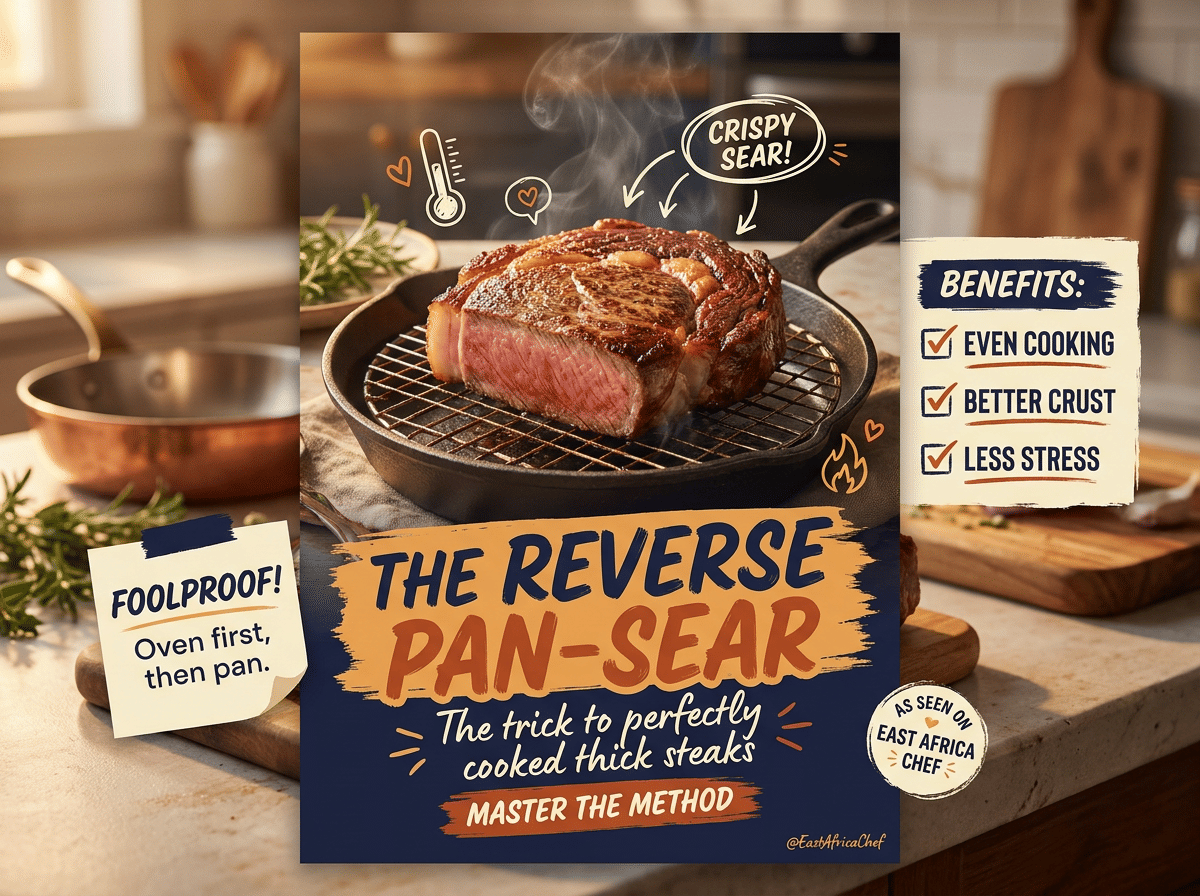
If you’ve ever sliced into a thick steak only to find a grey, overcooked ring around a barely warm centre, the reverse sear is about to change everything. This technique — low oven first, scorching-hot pan second — flips the traditional sear-then-roast method on its head, and the results are extraordinary: edge-to-edge doneness, a deeply caramelised crust, and none of the guesswork.
Whether you’re working with a beautiful piece of aged beef from your local butcher in Nairobi, a thick-cut T-bone from Dagoretti, or premium Ankole beef you’ve sourced from Uganda, the reverse pan sear is the technique that separates the confident home cook from the one who’s been secretly cutting steaks in half just to check.
What Is the Reverse Pan Sear?
The traditional method goes: sear the steak hard in a hot pan, then finish it in the oven. The reverse sear does exactly that — backwards. You start the steak in a low, gentle oven (around 120°C/250°F) and bring it slowly up to just below your target internal temperature. Then, you pull it out and sear it in a ripping-hot cast iron pan for a minute or two per side.
The logic is elegant. By raising the steak’s temperature slowly and evenly, you eliminate the temperature gradient that causes overcooking at the edges. When you hit it with the hot pan at the end, the crust forms fast — without pushing more heat through to the centre.
Why It Works So Well for Thick Steaks
This technique is specifically designed for steaks that are at least 3 cm (about 1.25 inches) thick. A thin steak cooks through quickly regardless of method. But with a thick ribeye or sirloin, hitting a perfect medium-rare (57°C/135°F) all the way through using only a pan or grill is genuinely difficult.
The low oven heat also gives you a remarkable window of control. Because the internal temperature rises slowly, you’re not rushing. There’s no split-second between perfect and overdone. You have time to set the table, heat your pan, and rest easy.
There is one more advantage that experienced cooks swear by: drier surface = better crust. The extended time in the oven dries out the steak’s exterior, which means when it hits that screaming-hot pan, you get an immediate, deep Maillard crust with zero steaming.
How to Reverse Pan Sear a Thick Steak
Prep Time: 10 minutes (+ optional overnight salting) Cook Time: 45–60 minutes (oven) + 4 minutes (sear) Total Time: About 1 hour 15 minutes Servings: 2 Difficulty: Medium
Ingredients
- 2 thick-cut steaks (ribeye, sirloin, or T-bone), at least 3 cm thick, approximately 300–400g each
- 1½ tsp coarse sea salt (or rock salt)
- 1 tsp freshly cracked black pepper
- 2 tbsp neutral oil with a high smoke point (such as sunflower or avocado oil)
- 2 tbsp unsalted butter
- 3–4 garlic cloves, crushed but whole
- 3–4 sprigs fresh thyme or rosemary
Instructions
- Season generously and rest. Pat your steaks completely dry with paper towels. Season all sides liberally with salt and pepper. For best results, place on a wire rack over a tray and refrigerate uncovered for at least 1 hour — or overnight. This dry-brining step pulls moisture to the surface, seasons deeply, and sets up that incredible crust.
- Preheat your oven low. Set your oven to 120°C (250°F). Place the steaks on a wire rack set over a baking tray. This allows air to circulate around the meat evenly.
- Roast slowly to near target temperature. Slide the steaks into the oven and cook until they reach about 5°C (10°F) below your desired final temperature. For medium-rare, that means pulling them out at around 52°C (125°F). This will take 45–60 minutes depending on thickness — use a meat thermometer, not a timer.
- Pull the steaks and rest briefly. Remove steaks from the oven and tent loosely with foil for 5–10 minutes. Don’t skip this — it relaxes the muscle fibres and lets you crank up your pan properly.
- Heat your cast iron until it’s genuinely fierce. Place a cast iron pan over the highest heat your stove allows. Let it heat for 3–4 full minutes until it begins to lightly smoke. Add your oil and swirl — it should shimmer immediately.
- Sear hard and fast. Lay the steaks in the pan without crowding. Sear for 60–90 seconds per side without moving them. Press gently for full surface contact. In the final 30 seconds, add butter, garlic, and herbs. Tilt the pan and spoon the foaming butter over the steaks repeatedly — this is basting, and it builds flavour fast.
- Sear the edges. Use tongs to stand each steak on its fatty edge for 20–30 seconds. That rendered fat cap is golden and delicious.
- Rest and serve immediately. Transfer steaks to a clean board and rest for 3–5 minutes. Slice against the grain and serve.
Getting the Temperature Right
This is where a meat thermometer pays for itself. The reverse sear gives you control, but only if you know what you’re aiming for:
| Doneness | Pull from Oven At | Final Internal Temp |
|---|---|---|
| Rare | 46°C / 115°F | 52°C / 125°F |
| Medium-Rare | 52°C / 125°F | 57°C / 135°F |
| Medium | 57°C / 135°F | 63°C / 145°F |
| Medium-Well | 63°C / 145°F | 68°C / 155°F |
The sear adds the final 4–5°C, so always pull early.
Chef’s Notes
- Cast iron is non-negotiable for the sear. Stainless works in a pinch, but cast iron retains heat the best when a cold(ish) steak hits the surface.
- Don’t skip the dry surface. Any moisture on the steak will steam before it sears. Pat dry again right before it goes into the pan if needed.
- No thermometer? Use the finger test as backup, but invest in a digital probe — they cost very little and transform your cooking.
- For Ankole or grass-fed beef, which tends to be leaner, pull at the lower end of the temperature range. Lean beef overcooks fast.
- Marinating works differently here. If you’ve marinated your steak, pat it extremely dry before the oven step, and especially before the sear.
Serving Suggestions
Slice across the grain and fan out on a warm wooden board. Spoon the remaining garlic-herb butter from the pan over the top. Serve alongside:
- Roasted rosemary potatoes for a hearty, crowd-pleasing plate
- A sharp tomato and onion kachumbari to cut through the richness
- Creamed sukuma wiki for something green and deeply satisfying
- Ugali wa mahindi if you want to keep it grounded and East African all the way through
A generous squeeze of lemon right at the table brightens everything.
Variations
Spiced crust: Mix your salt and pepper with a pinch of ground cumin, coriander, and a little smoked paprika before seasoning. The reverse sear’s slow heat blooms the spices beautifully.
Compound butter finish: Mix softened butter with garlic, herbs, and a pinch of chilli flakes. Press into a log, chill, and slice over the steak the moment it comes off the pan.
Over charcoal: Skip the pan sear and finish over a volcano-hot charcoal grill instead. Same principle — low oven, explosive heat at the end — but with smoke threaded through every bite.