
Bakery
The Heart of Great Bread: Understanding Artisan Bread Flour
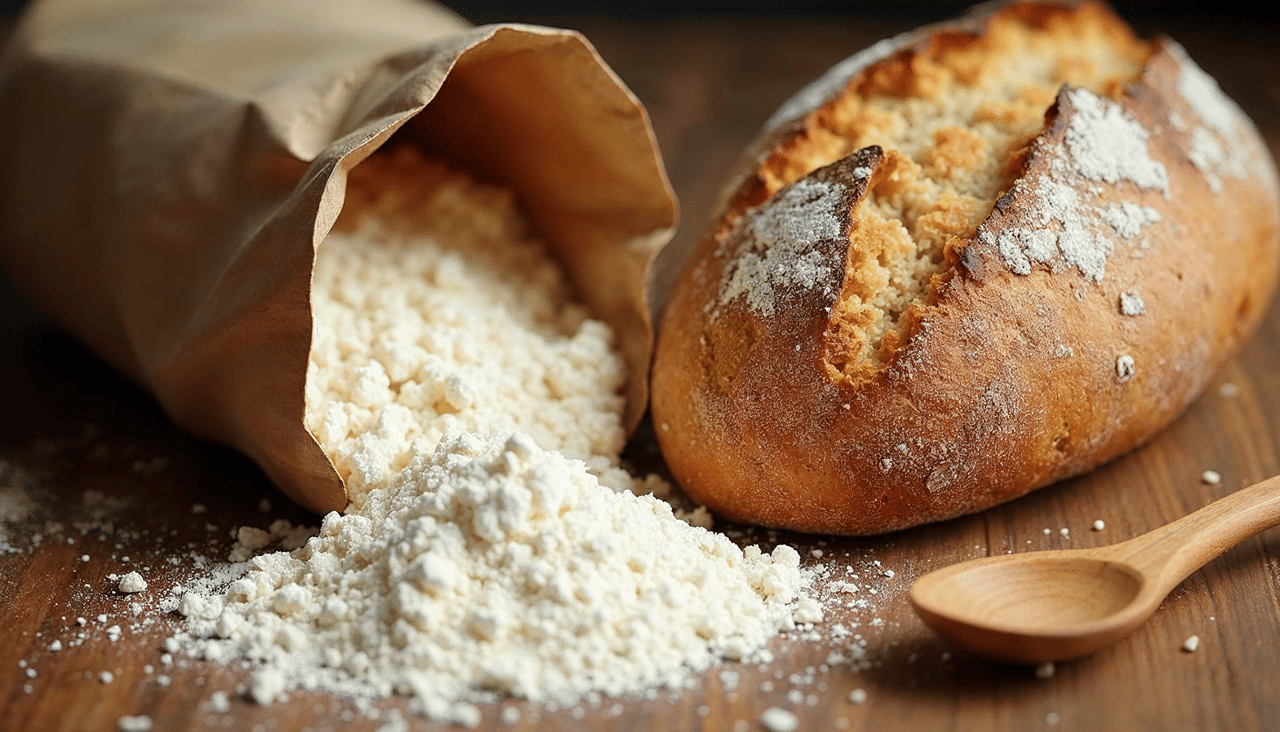
Hello! There’s something truly special about a loaf of artisan bread, isn’t there? That crackling crust, the wonderfully chewy inside (the crumb!), the complex flavours… it’s a world away from standard sliced bread. From rustic sourdoughs and crusty baguettes to hearty ciabattas, these breads are popping up everywhere, moving from specialty bakeries onto supermarket shelves, and captivating our taste buds.
But what exactly gives artisan bread its unique character? While technique and fermentation play huge roles, the journey to a great loaf starts much earlier – it starts with the artisan bread flour.
Have you ever wondered if the flour you use really makes a difference? Or perhaps you’ve seen “artisan bread flour” and questioned what sets it apart? You’re not alone! The flour might seem like a simple ingredient, but it’s actually a complex substance packed with components that dramatically influence the final bread.
Join me as we explore the fascinating world of artisan bread flour. We’ll look at what makes it different, dive into the key components inside that bag of flour and understand how they work their magic, touch on how flour quality is tested, and even look at a classic example like the baguette. Whether you’re a seasoned baker or just starting your bread-making adventure, understanding your flour is key to unlocking consistently amazing results. Let’s get started!
What Makes Artisan Bread So Special (and Popular)?
Before we dive into the flour itself, let’s quickly touch on why artisan bread has captured so many hearts and kitchens. Often, it’s associated with:
- Simpler Ingredients: Many artisan styles focus on the basics: flour, water, salt, and yeast (often a natural sourdough starter). This appeals to those seeking “clean label” foods with fewer additives.
- Authenticity and Tradition: There’s a connection to traditional methods, often involving longer fermentation times which develop deeper flavours.
- Sensory Experience: Artisan bread is a feast for the senses – the look of a handcrafted loaf, the sound of the crust, the aroma, the texture, and of course, the taste. Bakers often get creative with shapes, scoring patterns, and ingredients.
- Perceived Health Benefits: While not always the case, some associate longer fermentation processes (like sourdough) with easier digestion compared to faster-made conventional breads.
All these factors contribute to its growing popularity. But achieving that signature quality relies heavily on starting with the right foundation: the flour.
Choosing the Right Foundation: What is Artisan Bread Flour?
So, what flour is typically used for these wonderful breads? While there isn’t one single definition set in stone, artisan bread flour generally refers to flour milled specifically to provide the characteristics needed for these types of loaves.
The Wheat Behind the Flour
Often, the best flour for artisan bread comes from specific types of wheat known for their protein quality. Millers commonly use:
- Durum Wheat
- Common Wheat
These types of wheat are “hard” because their kernels contain a higher percentage of protein compared to “soft” wheats used for cakes and pastries. This protein is crucial for bread structure, as we’ll see shortly.
Key Numbers: Protein and Ash Content
When bakers and millers talk about artisan bread flour, two numbers often come up:
- Protein Content: This typically falls in the range of 10.5% to 12.5%. This is often slightly lower than high-protein bread flours designed for very high-volume commercial loaves but provides a good balance of strength and extensibility needed for artisan styles. We’ll talk more about why protein is so important in a moment.
- Ash Content: This usually ranges from 0.48% to 0.55%, although some specialty artisan flours might go slightly higher (up to 0.60% or even 0.8-0.9% for certain types). Ash content is essentially a measure of the mineral content left in the flour after milling. Since minerals are concentrated in the bran and germ of the wheat kernel, a higher ash content generally indicates that less of the bran has been sifted out. We’ll discuss the implications of this later.
It’s also worth noting that, like other flours, artisan bread flour can be enriched with nutrients like B vitamins and iron, depending on local regulations and manufacturer practices.
Inside the Flour Bag: Key Components and Their Roles
A bag of flour might look uniform, but it’s a complex mixture of natural components, each playing a vital role in bread making. Understanding these components helps explain why different flours behave differently.
The Power of Protein (Gluten’s Magic)
When you hear bakers talk about flour, “protein” and “gluten” are terms you’ll hear a lot. Why?
- Forming Gluten: Flour contains specific proteins (mainly glutenin and gliadin). When these proteins are mixed with water, they link together to form an elastic network called gluten.
- Viscoelasticity: This gluten network is viscoelastic – meaning it’s both viscous (can flow slowly) and elastic (can stretch and bounce back). Think of it like a stretchy, pliable net within your dough.
- Gas Retention: This network is essential for trapping the gases (carbon dioxide) produced by yeast during fermentation. Without a strong enough gluten network, the gas would escape, and your bread wouldn’t rise properly.
- Structure: During baking, the gluten network sets, along with the starch, providing the final structure and chewiness of the bread.
- Water Absorption: The amount and quality of protein significantly affect how much water the flour can absorb. Higher protein generally means higher water absorption. Vital wheat gluten (pure gluten protein sometimes added to flour) can absorb almost twice its weight in water!
The protein content (typically 10.5-12.5% for artisan flour) needs to be sufficient to form a good network, but sometimes artisan bakers prefer flour that isn’t too strong, allowing for a more open crumb structure characteristic of breads like ciabatta.
Starch: More Than Just Filler
Starch is the most abundant component in flour. It exists in two main forms:
- Native Starch: This is the starch as it naturally exists within the wheat kernel’s endosperm (the main part milled into white flour).
- Damaged Starch: During the milling process, some starch granules inevitably get physically damaged.
Why does this matter?
- Water Absorption: Damaged starch granules absorb significantly more water than native starch granules. A controlled amount of damaged starch is necessary for proper dough hydration (absorption) and handling.
- Food for Yeast: Enzymes in the flour (and yeast) can more easily break down damaged starch into simple sugars. These sugars are essential food for the yeast during fermentation, helping the dough rise and develop flavour.
- Crust Colouring: These sugars also contribute to the browning of the crust during baking (through Maillard reactions and caramelization).
- Setting the Structure: In the oven, as the dough heats up, both native and damaged starch granules absorb water and swell, eventually bursting and releasing long chains of starch molecules. This process, called gelatinization, is crucial. The gelatinized starch forms a gel that sets around the gluten network, locking in the bread’s structure as it bakes.
- Softness & Shelf Life: Some damaged starch can contribute to a softer crumb texture and may help extend the shelf life slightly by influencing moisture retention.
- Too Much of a Good Thing?: While some damaged starch is essential, excessive amounts can cause problems. Dough can become sticky and difficult to handle, and the final bread texture might be negatively affected. Millers carefully control the milling process to achieve the right level of damaged starch for the intended flour type.
Enzymes: The Unseen Workers
Flour naturally contains enzymes, which are like tiny biological catalysts that speed up specific reactions. A key group for bread making is the amylases.
- Starch Breakdown: Amylases break down starch (especially damaged starch) into smaller sugars. Alpha-amylase is particularly important.
- Fueling Fermentation: As mentioned, these sugars provide food for the yeast, ensuring vigorous fermentation and good gas production (gassing), which makes the dough rise.
- Measuring Activity (Falling Number): The level of amylase activity in flour is crucial. Too little, and fermentation will be sluggish, resulting in dense bread with poor crust colour. Too much (often due to sprouted wheat kernels), and the dough can become overly sticky and weak, leading to a gummy crumb.
- Millers measure amylase activity using a test called the Falling Number. A typical target for bread flour is around 250 seconds. This indicates sufficient natural enzyme activity to support good fermentation without needing added sugar in the recipe.
- If the Falling Number is too high (e.g., > 350 seconds), indicating low enzyme activity, millers will often supplement the flour by adding a small amount of diastatic malt (usually malted barley flour), which is rich in amylase enzymes. Always check the flour specification sheet (often called a Certificate of Analysis or COA) if you need precise information.
Bran: Adding Character (Especially in Whole Wheat)
Bran is the outer protective layer of the wheat kernel.
- Presence: While mostly removed to make white artisan bread flour, significant amounts remain in whole wheat flour (potentially up to 19%).
- Impact: Bran adds flavour, colour, nutrients (especially fibre), and texture to bread. However, the sharp bran particles can interfere with gluten development by physically cutting the gluten strands. This is why whole wheat breads often have a denser volume and require different handling (like longer mixing or soaking the bran).
- Mixing Tolerance: Bran reduces the dough’s tolerance to mixing; it can break down more easily if overmixed.
- Soaking: If adding bran separately as an ingredient, it’s recommended to soak it in water for at least an hour beforehand to soften it and improve hydration.
Ash Content: What Does It Tell Us?
We mentioned ash content earlier (0.48-0.55% typically for artisan flour). What does it signify?
- Indicator of Bran Removal: Ash represents the mineral content of the flour. Since minerals are concentrated in the bran and germ, a higher ash content means more bran particles are present in the flour. It’s an indicator of how efficiently the milling process separated the white endosperm from the outer layers. Patent flours (from the very centre of the endosperm) have lower ash than ‘clear’ flours (from closer to the bran).
- Effect on Dough: While ash itself doesn’t significantly affect water absorption or mixing properties directly, the bran particles associated with higher ash content do interfere with gluten formation, as noted above. This can lead to slightly lower loaf volume.
- Colour: Higher ash content generally results in a less bright white flour, giving the final bread a slightly darker, more “off-white” or creamy colour.
- Artisan Bread Tolerance: Because artisan breads often prize a rustic appearance and creamy crumb colour, they can often tolerate slightly higher ash levels than standard white pan bread, where a very bright white crumb is often desired. Some specialty artisan flours intentionally have higher ash (0.55-0.60% or even higher) for flavour and appearance, but these will typically require more water during mixing.
Granulation: Texture Matters
This refers to the particle size of the flour. It’s particularly relevant for whole wheat flours.
- Impact: The coarseness or fineness of the flour directly affects the texture of the final bread.
- Coarse vs. Fine: Coarser whole wheat flour leads to a denser loaf with a more noticeable, perhaps “earthier” or grainier crumb texture. Finer whole wheat flour produces a more refined crumb texture with a smoother mouthfeel, closer to white bread.
How Bakers Know It’s Good: Testing Flour Quality
Professional bakers and millers don’t just guess if a flour will work; they rely on standardized tests to measure its properties and predict its performance. Some key instruments include:
- Farinograph: This is a very common tool. It measures the dough’s resistance to mixing over time. A mixer with sensors records how much force is needed to turn the mixing blades through the dough. This provides crucial information about:
- Water Absorption: How much water is needed to reach a standard dough consistency (often measured at 500 Brabender Units or BU).
- Dough Development Time (DDT): How long it takes for the dough to reach its maximum consistency (peak gluten development).
- Stability: How long the dough maintains its maximum consistency before starting to break down due to overmixing. Longer stability indicates stronger flour.
- Mixing Tolerance Index (MTI): Measures how much the dough consistency drops after a certain period past the peak, indicating its tolerance to overmixing.
- Mixolab: Another popular instrument that provides similar information to the Farinograph (dough strength, water absorption, mixing time) but also measures dough behaviour during heating and cooling, giving insights into starch gelatinization and enzyme activity.
- Alveograph: This tool measures the dough’s extensibility (how far it can stretch) and elasticity (its ability to spring back). It inflates a thin sheet of dough like a balloon until it bursts. This data is invaluable for assessing the balance between strength and stretchiness, which is critical for breads needing good volume and an open crumb.
These tests help millers ensure consistent flour quality and allow bakers to understand how a particular flour will behave, enabling them to adjust their recipes and processes accordingly.
Bringing it Together: Formulation and Techniques
Understanding flour components is great, but how does it translate into actual bread making? Let’s look at an example and some related concepts.
A Classic Example: The Baguette
The French baguette is a perfect example of artisan bread often made with a relatively simple (“lean”) formula.
- Formula: Typically just artisan bread flour, water, salt, and yeast. It might contain very small amounts of sugar or shortening, but often doesn’t.
- Preferments: High-quality baguettes are often made using a preferment (like a poolish – a wet sponge made the day before) or long cold fermentation. These techniques develop complex flavours. The provided source gives example formulas using both a cold fermentation method and a poolish method.
- Characteristics: Baguettes are known for their crisp crust and relatively open crumb. They have a high crust-to-crumb ratio, meaning they can lose moisture quickly during baking and cooling and can dry out easily if overbaked.
- Process: The process often involves careful mixing to develop the gluten, bulk fermentation (the first rise) often with folds to strengthen the dough, gentle shaping, proofing (the final rise), scoring (cutting the top) to control expansion, and baking with steam to achieve that signature crust.
The Benefit of Patience: Aged Flour
Have you heard of aged or matured flour?
- What Happens: When flour is stored for a period (especially in sacks), it’s exposed to air. Oxygen in the air naturally interacts with components in the flour, particularly sulphur-containing amino acids in the proteins. This oxidation helps form stronger bonds (disulfide bridges) between gluten molecules, strengthening the dough.
- Natural Bleaching: This natural aging process also gently bleaches the flour pigments, resulting in a lighter colour.
- Challenges: Natural aging takes time and space, which can be expensive, especially for large quantities of flour.
- Chemical Alternatives: To speed things up, chemical oxidizing agents like ascorbic acid (Vitamin C) are sometimes added by millers. (Another agent, Azodicarbonamide or ADA, is effective but often avoided by the artisan and clean label community). Ascorbic acid is generally considered a more acceptable “dough conditioner.”
Common Questions Answered
The source material also touches on a few practical questions:
- Folding Dough During Long Fermentation: Is it necessary? Yes, especially for long, cold fermentations. Folding the dough periodically reinforces the gluten network, making it stronger and better able to hold onto the gas produced. Skipping folds can result in a weaker dough that doesn’t hold its shape well and may have a less open crumb.
- Water Absorption vs. Flour Moisture: Are they related? Yes. The total amount of water a dough can hold depends on both the flour’s inherent absorption capacity (linked to protein, damaged starch, etc.) and the initial moisture content of the flour itself (flour isn’t completely dry, usually around 13-14% moisture). If your flour arrives slightly drier, you might be able to add a touch more water to your recipe, and vice-versa.
- Using High Ash Flour: Can flour with higher ash content be used for artisan bread? Yes. As mentioned, the rustic appearance and off-white colour often desired in artisan loaves make them more forgiving of the slightly darker colour associated with higher ash. Flours with ash up to 0.60% or even higher are sometimes used, but remember they generally require more water in the mix due to the associated bran content.
Conclusion: Flour Power for Your Artisan Baking
Wow, who knew there was so much going on inside that simple bag of flour? We’ve journeyed from the wheat field to the final loaf, exploring what defines artisan bread flour, dissecting its crucial components like protein, starch, enzymes, bran, and ash, and understanding how each element contributes to the final bread making result. We’ve also seen how flour quality is measured and how these principles apply in practice, using the beloved baguette as an example.
The key takeaway? Flour isn’t just a passive ingredient; it’s an active, complex system. Understanding its properties – the protein content for strength, the starch for structure, the enzymes for fermentation, the ash content for character – empowers you as a baker. It helps you choose the right flour for the job, troubleshoot problems, and adapt your techniques to get the best possible results from any given batch.
So, the next time you bake, take a moment to appreciate the incredible potential held within your artisan bread flour. By understanding its secrets, you’re well on your way to crafting loaves that are not just homemade, but truly artisanal. Happy baking!